
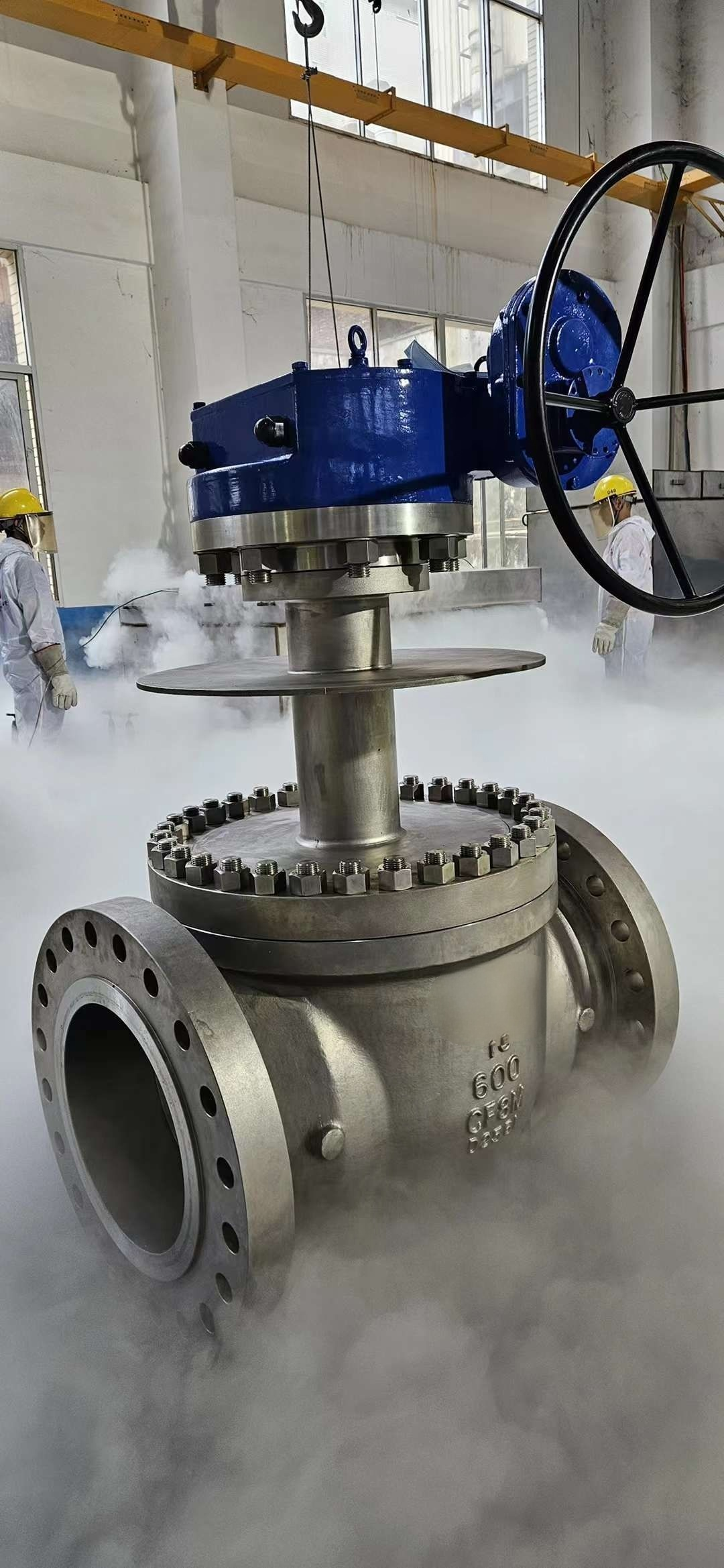
Cryogenic Globe Valve for LNG and Cryogenic Fluid Control

Short Description:

Keywords: Cryogenic Globe Valve, -196℃ Globe Valve, LNG Globe Valve, Low Temperature Globe Valve, Cryogenic Stop Valve, Extended Bonnet Globe Valve, Bellows Seal Globe Valve, Cryogenic Service Valve, DJ41Y Cryogenic Valve, LN2 Control Valve

Product Short Description:
Womic Steel supplies high-performance cryogenic globe valves engineered for precise flow control in extreme low-temperature services down to -196°C, specifically designed for LNG receiving terminals, air separation units, liquid nitrogen/liquid oxygen systems, and ethylene processing plants. Our cryogenic globe valves feature extended bonnet with drip plate to protect stem seals from cryogenic temperatures, metal-to-metal or soft-seat sealing options, and bolted bonnet construction for reliable service. Available in sizes from 1/2" to 24" (DN15 to DN600) with pressure ratings from Class 150 to Class 900. Body materials include austenitic stainless steel (LCB, LCC, CF3, CF3M, CF8, CF8M) with mandatory Charpy impact testing at -196°C per BS 6364. All pressure-containing parts undergo deep cryogenic treatment at -196°C to ensure dimensional stability and prevent distortion at service temperatures. Valves can be supplied with ISO 15848-1 low fugitive emission packing, bellows seal for zero leakage applications, and pneumatic or electric actuation. Mill certificate EN 10204 3.1/3.2, hydrostatic test, cryogenic performance test per BS 6364, fugitive emission test available. Factory direct supply for LNG, industrial gas, and cryogenic industrial projects worldwide.

Cryogenic Globe Valve Size:
1/2" – 24" (DN15 – DN600)

Standard & Grade of Cryogenic Globe Valve:
BS 6364, BS 1873, API 623, ASME B16.34, ISO 28921-1, MSS SP-134, ISO 15848-1 (fugitive emission), NACE MR0175

Usage of Cryogenic Globe Valve:
LNG receiving terminals, LNG liquefaction plants, air separation units (ASU), liquid nitrogen/liquid oxygen pipelines, liquid hydrogen service, ethylene and propylene plants, low temperature methanol service, cryogenic gas processing, liquid helium service, refrigeration systems, cryogenic storage vessels, cold box piping

Womic Steel offering high quality & competitive prices of cryogenic globe valve, -196℃ low temperature stop valve, LNG globe valve, extended bonnet cryogenic globe valve, bellows seal cryogenic globe valve. Mill certificate EN 10204 3.1/3.2, hydro test, cryogenic performance test, deep cryogenic treatment, low fugitive emission design, NACE MR0175 compliant. Factory direct supply for LNG and cryogenic industrial projects worldwide.
Cryogenic Globe Valve

1. Womic Steel: Manufacturing Capabilities & Company Strength

Womic Steel Group is a premier manufacturer and global supplier of cryogenic globe valves with over 20 years of expertise in producing high-performance valves for extreme low-temperature flow control services. Our state-of-the-art manufacturing facility integrates forging, machining, assembly, and testing capabilities:

Cryogenic Globe Valve Production Line: Dedicated cryogenic valve manufacturing line with CNC machining centers, specialized globe valve machining equipment, and cryogenic testing facilities capable of testing valves down to -196°C using liquid nitrogen. Annual production capacity exceeding 15,000 cryogenic globe valves.
Deep Cryogenic Treatment Facility: In-house cryogenic treatment furnace (-196°C) for stress relief of all pressure-containing parts, ensuring dimensional stability and preventing distortion at service temperatures. Parts are soaked for minimum 8 hours per BS 6364 requirements.

All cryogenic globe valves are designed with:

Extended bonnet with drip plate to maintain stem packing at operable temperatures and prevent ice formation
Bolted bonnet construction for reliable sealing
Disc/seat configurations: metal-to-metal or soft-seat (PCTFE, PEEK)
Low fugitive emission packing meeting ISO 15848-1 (Class A or B)
Optional bellows seal for zero leakage critical applications
Optional backseat for stem seal redundancy

Quality Certifications & Regulatory Compliance:
• ISO 9001:2015 Certified
• PED 2014/68/EU (CE Marking) for pressure equipment
• API 623 / BS 1873 Design Compliance
• ISO 15848-1 Low Fugitive Emission Certification
• EN 10204 3.2 Certification with third-party validation (TÜV, BV, SGS, LR)
• Third-Party Inspection (TPI) approved by SGS, BV, ABS, DNV, TÜV, Lloyd's Register
• NACE MR0175 / ISO 15156 compliance for sour service cryogenic applications
• ATEX certification available upon request for explosive atmospheres

Production Flexibility for Cryogenic Globe Valves:
Sizes: 1/2" – 24" (DN15 – DN600)
Pressure Rating: Class 150 – Class 900 (PN16 – PN160)
End Connections: Flanged (RF, RTJ per ASME B16.5/B16.47), Butt Weld (BW per ASME B16.25), Socket Weld (SW per ASME B16.11), Threaded (NPT per ASME B1.20.1)
Body Materials: LCB, LCC, CF3, CF3M, CF8, CF8M
Seat Materials: PCTFE (primary cryogenic seat), RPTFE, PEEK, Stellite (metal seat)
Actuation: Manual (handwheel), Pneumatic, Electric
Monthly production capacity: 1,200-1,800 units depending on size and complexity

Global Recognition: Womic Steel is a trusted supplier to global EPC contractors and LNG operators including Technip Energies, Saipem, Bechtel, and Sinopec, serving over 35 countries across LNG, petrochemical, and industrial gas sectors.

2. Cryogenic Globe Valve: Material Composition & Key Specifications

Cryogenic globe valves operate at temperatures as low as -196°C, where standard materials become brittle and standard sealing systems fail due to thermal contraction. Our cryogenic globe valves are specifically engineered for these extreme conditions with design features validated by BS 6364 and ISO 28921-1.

Key Design Features for -196°C Service:

Extended Bonnet with Drip Plate: The bonnet is extended to ensure the packing area (stem seals) stays at a temperature above freezing, preventing ice formation and maintaining seal integrity. This is a mandatory design feature per BS 6364 for valves with service temperatures ≤ -101°C . The drip plate prevents condensed moisture from dripping onto insulation.
Deep Cryogenic Treatment: All pressure-containing parts (body, bonnet, disc, stem) are subjected to deep cryogenic treatment at -196°C for minimum 8 hours (or multiple cycles) to transform retained austenite, relieve residual stresses, and ensure dimensional stability at service temperature.
Bolted Bonnet Construction: Per BS 6364 and API 623 requirements, cryogenic globe valves feature bolted bonnet construction for reliable sealing and ease of maintenance. Metal gaskets or spiral wound gaskets provide fire-safe sealing.

Specialized Materials for Cryogenic Service:

Component Material Options Temperature Range Key Characteristics
Body/Bonnet ASTM A352 LCB/LCC -46°C to +300°C Low temperature carbon steel
Body/Bonnet ASTM A351 CF3/CF3M (304L/316L SS) -196°C to +300°C Austenitic stability at cryogenic temps
Body/Bonnet ASTM A182 F304L/F316L (Forged) -196°C to +300°C High integrity, small sizes
Disc ASTM A182 F304/F316 -196°C to +300°C Hardfaced seat option
Stem ASTM A182 F304L/F316L -196°C to +300°C Extended strength at low temps
Valve Seat PCTFE (Polychlorotrifluoroethylene) -196°C to +150°C Primary cryogenic seal
Valve Seat Stellite Hardfacing -196°C to +400°C Metal-seat option for high temp
Body Gasket Spiral Wound (Graphite + SS) -196°C to +400°C Fire-safe, reliable seal
Stem Packing Low Fugitive Emission Graphite -196°C to +400°C ISO 15848 certified
Bolting ASTM A320 Gr.L7 / A194 Gr.7 Low temp carbon steel For LCB/LCC body
Bolting ASTM A320 Gr.B8 CL.2 / A194 Gr.8 -196°C to +400°C For SS body

Critical Material Verification:

100% PMI (Positive Material Identification) on all alloy components
Charpy V-notch impact testing at -196°C for body/bonnet material
Hardness testing for sour service applications (per NACE MR0175)

3. Dimensional Range & Standards Compliance

Item Specification
Design Standard BS 6364, BS 1873, API 623, ASME B16.34, ISO 28921-1, MSS SP-134
Type Bolted Bonnet, OS&Y (Outside Screw and Yoke)
Size Range 1/2" – 24" (DN15 – DN600)
Pressure Rating Class 150 – Class 900 (PN16 – PN160)
Temperature Range -196°C to +300°C (depending on materials)
End Connections Flanged (RF, RTJ), Butt Weld, Socket Weld, Threaded
Face-to-Face ASME B16.10, API 623, BS 1873
Fugitive Emission ISO 15848-1 (Class A or B)
Bolting ASME B16.34, ASTM A320/A194
Cryogenic Testing BS 6364, MSS SP-134, ISO 28921-1
Hydrostatic Testing API 598, ISO 5208
Actuation Handwheel (Manual), Pneumatic, Electric

Design Features per BS 6364 and ISO 28921-1:

Extended bonnet length ensures packing at viable operating temperature
Backseat feature for stem seal redundancy
Seat and disc hardfaced to prevent seizing and galling at cryogenic temperatures
Thermal stabilization treatment on body and obturator
Cavity relief pressure arrangement (for globe valves with pressure traps)

4. Available Configurations – Cryogenic Globe Valve (-196°C)

Size Pressure Class Body Material Seat Material End Connection Actuation Typical Application
1/2" – 2" CL150-900 A182 F304L/F316L PCTFE SW/NPT/BW Handwheel Instrumentation, sampling lines
2" – 6" CL150-900 A351 CF3/CF3M PCTFE/Stellite Flange/BW Handwheel/Gear LNG plant, ASU control
2" – 6" CL150-600 A352 LCB/LCC PCTFE Flange/BW Handwheel LNG receiving terminals
6" – 12" CL150-600 A351 CF3/CF3M PCTFE/Stellite Flange/BW Gear Main LNG transfer lines
8" – 16" CL150-300 A351 CF3/CF3M PCTFE Flange/BW Gear/Electric LNG storage tank outlet
12" – 24" CL150-300 A351 CF3M PCTFE Flange/BW Gear/Electric Large diameter cryogenic

Custom configurations outside these ranges available upon request. For high pressure or critical applications, bellows seal option provides zero stem leakage.

5. Common Standards for Cryogenic Globe Valves

Standard Description Application
BS 6364 Specification for cryogenic valves for LNG and low temperature service Primary design standard for cryogenic service
BS 1873 Steel globe and globe stop and check valves for petroleum, petrochemical and allied industries Globe valve design standard
API 623 Steel Globe Valves - Flanged and Butt-Welding Ends US equivalent globe valve standard
ISO 28921-1 Industrial valves - Isolating valves for low-temperature applications International cryogenic valve standard
ASME B16.34 Valves - flanged, threaded, and welding end Pressure-temperature rating basis
MSS SP-134 Standard for valves for cryogenic service US cryogenic valve standard
ISO 15848-1 Industrial valves - measurement and test procedures for fugitive emissions Low fugitive emission certification
ASME B16.10 Face-to-face and end-to-end dimensions Installation dimension standard
API 598 Valve inspection and testing Test acceptance criteria
NACE MR0175 / ISO 15156 Petroleum and natural gas industries - materials for H2S environments Sour service compliance

Usage: LNG receiving terminals, LNG liquefaction plants, air separation units (ASU), liquid nitrogen/liquid oxygen pipelines, liquid hydrogen service, ethylene and propylene plants, low temperature methanol service, cryogenic gas processing, liquid helium service, refrigeration systems, cryogenic storage vessels.

6. Manufacturing Process – Cryogenic Globe Valve (-196°C)

Womic Steel employs specialized manufacturing processes for cryogenic globe valves with emphasis on material qualification, deep cryogenic treatment, and cryogenic performance verification.
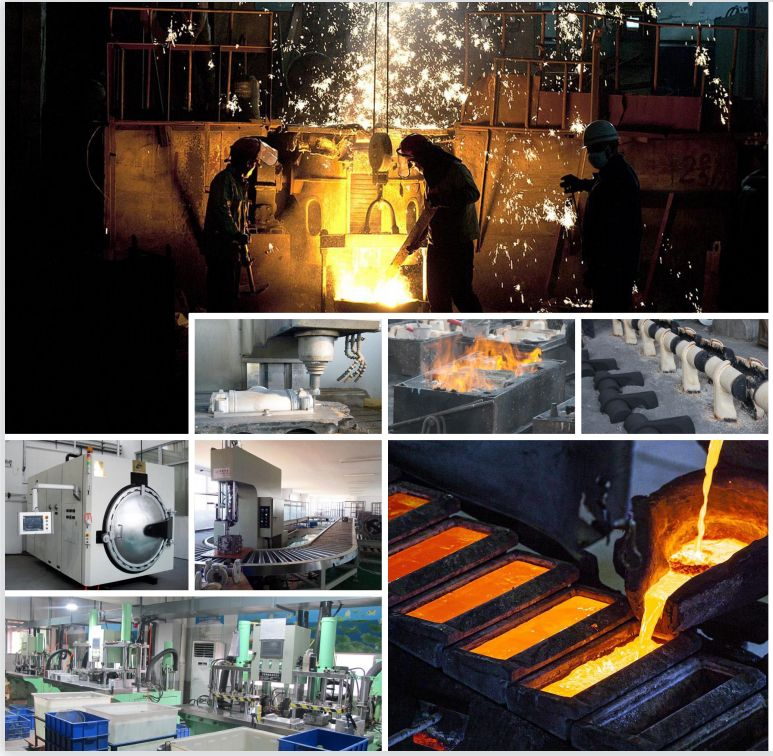
Step 1: Raw Material Inspection and PMI
• Body and bonnet castings/forgings verified by chemical analysis and PMI
• Charpy impact testing at -196°C per BS 6364 to verify low-temperature toughness
• 100% PT (Penetrant Testing) and UT (Ultrasonic Testing) on castings for defects
• Hardness testing for sour service applications

Step 2: Machining
• CNC machining of body, bonnet, disc, and stem to precise tolerances
• Specialized machining of disc and seat sealing surfaces for leak-tight seal
• Surface finish of sealing areas: Ra ≤ 0.4μm (mirror finish)
• Machining of backseat and stem seal grooves

Step 3: Deep Cryogenic Treatment (Critical for -196°C Service)
• All critical components subjected to deep cryogenic treatment at -196°C (liquid nitrogen soak)
• Minimum soak time: 8 hours per BS 6364 (typically 8-12 hours)
• Multiple cycles for large or complex castings
• Purpose: Transform retained austenite, relieve residual stresses, ensure dimensional stability
• Followed by tempering to restore ductility

Step 4: Assembly
• Components cleaned to remove any oil, grease, or contaminants
• All assembly performed in clean room environment
• Lubrication with cryogenic-compatible lubricants (non-hydrocarbon based)
• Disc-to-seat alignment and pre-load adjustment
• Stem seal and packing installation with low fugitive emission packing
• Extended bonnet assembly with drip plate positioned above insulation line

Step 5: Pre-Test Inspection
• Dimensional verification of all critical dimensions
• Torque verification of bolting (per ASME B16.34)
• Pneumatic seat test (low pressure) before hydrostatic testing

Step 6: Hydrostatic Test (Per API 598)
• Shell test: 1.5 × design pressure for minimum 15 seconds, no visible leakage
• Seat test: 1.1 × design pressure, low pressure seat test
• No visible leakage on closure elements

Step 7: Cryogenic Performance Test (Critical for -196°C Service per BS 6364)
• Valve immersed in liquid nitrogen (-196°C) for minimum 2 hours
• Low pressure (0.6 MPa) pneumatic seat test at temperature
• Seat leakage measured and recorded
• No damage or distortion allowed

Step 8: Fugitive Emission Test (Per ISO 15848-1)
• Valves with low fugitive emission packing tested per ISO 15848-1
• Leakage measured on helium leak detector
• Acceptance: Class A or B depending on customer requirement

Step 9: Final Inspection and Marking
• Visual inspection for surface defects, coating integrity, marking legibility
• Permanent marking per BS 6364 / API 623: manufacturer, size, pressure class, material, temperature rating, test stamp, serial number
• Documentation preparation and review
Cryogenic Globe Valve2

7. Quality Control & Testing Procedures for Cryogenic Globe Valve (-196°C)

Stage Inspection Method Purpose
Raw Material PMI (Positive Material Identification) Verify alloy grade and chemistry
Raw Material Charpy Impact Test at -196°C Verify low-temperature toughness per BS 6364
Raw Material PT/UT (Casting Inspection) Detect casting defects, inclusions, porosity
Machining Dimensional Inspection Verify critical dimensions per ASME B16.34
After Deep Cryogenic Treatment Dimensional Re-inspection Verify dimensional stability after treatment
Assembly Visual Inspection Check for contamination, proper assembly
Pre-Test Pneumatic Seat Test (Low Pressure) Verify initial seal integrity
Finished Valve Hydrostatic Shell Test Pressure integrity per API 598
Finished Valve Hydrostatic Seat Test Seat seal integrity per API 598
Finished Valve Cryogenic Performance Test per BS 6364 -196°C performance verification
Finished Valve Fugitive Emission Test (per ISO 15848-1) Low leak seal integrity
Finished Valve Visual and Dimensional Inspection Final quality verification
Finished Valve Marking Verification Ensure permanent marking per standards
Optional Tests for Critical Cryogenic Applications:
  • Helium Leak Test (mass spectrometer) for critical services
  • High pressure gas seat test
  • Thermal Shock Test per EN 12567 Annex A
  • Endurance Test per EN 12567 Annex B
  • ATEX compliance for explosive atmospheres
  • NACE MR0175 compliance for sour service

8. Primary Applications – Cryogenic Globe Valve (-196°C)

LNG Receiving Terminals

Imported LNG from carriers enters storage tanks through unloading arms, controlled by cryogenic globe valves for precise flow control. Our valves comply with BS 6364 and ISO 28921-1 for LNG service .

LNG Liquefaction Plants

Natural gas is cooled to -162°C for liquefaction. Cryogenic globe valves control flow through heat exchangers, separators, and fractionation columns with precise throttling capability.

Air Separation Units (ASU)

Liquid nitrogen (-196°C), liquid oxygen (-183°C), and liquid argon (-186°C) production and distribution. Cryogenic globe valves control product extraction and storage with reliable shutoff.

Liquid Hydrogen Service

Liquid hydrogen at -253°C requires specialized cryogenic globe valves with extended bonnets and PCTFE seats .

Ethylene and Propylene Plants

Low temperature applications at -40°C to -104°C. Cryogenic globe valves are standard in ethylene cold sections and propylene refrigeration circuits.

Cryogenic Storage Vessels

Tank outlet and inlet isolation for cryogenic storage tanks requires reliable globe valve shutoff.

Cold Box Piping

Air separation unit cold box internal piping uses cryogenic globe valves for process control.

Refrigeration Systems

Cryogenic refrigeration systems for industrial applications use globe valves for flow control.

9. Packaging & Shipping – Cryogenic Globe Valve (-196°C)

Packaging
  • Protection: All valves wrapped in rust-preventive paper or VCI paper. Flanges and end connections covered with plastic caps or steel blind flanges.
  • End Protection: Plastic caps for SW/NPT ends; steel blind flanges with gaskets for flanged ends. Butt weld ends protected with plastic or steel end caps.
  • Wooden Crates: For small valves, individual or multiple units packed in sturdy wooden crates with foam padding. Export-grade plywood crates with corner braces.
  • Steel Cradles: For large valves, individual steel cradles with flanged supports. Valves secured by bolting to the cradle.
  • Desiccant: Silica gel desiccant bags placed inside crates to absorb moisture.

Shipping
  • Mode of transportation: Air freight for urgent valves; sea freight for large valves and bulk orders.
  • Containerization: Small valves palletized and loaded into containers; large valves in flat rack containers.
  • Labeling: Each crate labeled with valve tag number, size, pressure class, material, serial number, and handling instructions.

Documentation Provided with Each Shipment
Mill Test Certificate (EN 10204 Type 3.1; Type 3.2 upon request)
Hydrostatic Test Report
Cryogenic Performance Test Report per BS 6364
Fugitive Emission Test Report (if applicable)
Material Test Reports (including Charpy impact at -196°C)
PMI Test Reports
Deep Cryogenic Treatment Record
Packing List, Commercial Invoice, Bill of Lading, Certificate of Origin
CE Declaration of Performance

10. Womic Steel Advantages & FAQ – Cryogenic Globe Valve (-196°C)

Why Partner with Womic Steel for Cryogenic Globe Valves?
Complete Size Range: 1/2" – 24" (DN15 – DN600), Class 150 – Class 900.
Deep Cryogenic Treatment at -196°C – ensures dimensional stability (per BS 6364).
Guaranteed cryogenic performance – 100% valves tested at -196°C per BS 6364.
Bolted bonnet construction – reliable sealing and ease of maintenance.
Extended bonnet with drip plate – standard for all cryogenic globe valves.
Low fugitive emission – ISO 15848-1 Class A or B packing.
Choice of body materials: LCB, LCC, CF3, CF3M, CF8, CF8M.
Choice of seat materials: PCTFE (primary cryogenic seat), RPTFE, PEEK, Stellite.
PED 2014/68/EU CE marking.
Competitive lead times: 8-12 weeks for standard configurations.
Frequently Asked Questions (FAQ) – Cryogenic Globe Valve (-196°C)
Q: What is the difference between a cryogenic globe valve and a standard globe valve?
A: Cryogenic globe valves have several key features not found in standard valves: extended bonnet with drip plate to protect stem seals; deep cryogenic treatment of all components; specialized seat materials (PCTFE, PEEK) for low temperatures; low fugitive emission packing; and mandatory cryogenic performance testing per BS 6364.
Q: What is the minimum service temperature for your cryogenic globe valves?
A: Our standard cryogenic globe valves are rated for -196°C service per BS 6364. For liquid hydrogen (-253°C) or liquid helium (-269°C) service, we offer specialized designs.
Q: What is deep cryogenic treatment and why is it required?
A: Deep cryogenic treatment is the process of cooling valve components to -196°C for minimum 8 hours. This transforms retained austenite, relieves residual stresses, and ensures dimensional stability at service temperature .
Q: What seat materials do you recommend for -196°C service?
A: For -196°C service, we recommend PCTFE as the primary seat material. PCTFE maintains its mechanical properties and provides excellent sealing at cryogenic temperatures .
Q: Is cryogenic performance testing mandatory?
A: Per BS 6364 and ISO 28921-1, cryogenic performance testing is mandatory for valves used in LNG and cryogenic service. Womic performs 100% cryogenic performance testing .
Q: Do you offer bellows seal for zero leakage applications?
A: Yes. For critical applications requiring zero stem leakage (such as hazardous or expensive fluids), we offer bellows seal design with secondary backseat.
Q: What is the typical lead time for cryogenic globe valves?
A: Standard lead time is 8-12 weeks for standard configurations. For larger sizes (> 12") or special materials, lead time is 12-16 weeks.

Project Experience & Case Study – Cryogenic Globe Valve (-196°C)

Project
Air Separation Unit Expansion – Zhejiang, China
Standard & Grade
BS 6364, BS 1873, ISO 28921-1
Specifications & Quantity:
  • 8" (DN200) Cryogenic Globe Valves, Class 300, CF3M Body, PCTFE Seats – 12 units
  • 6" (DN150) Cryogenic Globe Valves, Class 300, CF3M Body, PCTFE Seats – 24 units
  • 4" (DN100) Cryogenic Globe Valves, Class 300, CF3M Body, PCTFE Seats – 36 units
  • 2" (DN50) Cryogenic Globe Valves, Class 300, CF3M Body, PCTFE Seats – 48 units
Total: 120 units
Usage: Liquid nitrogen (-196°C) and liquid oxygen (-183°C) product extraction and storage control. Design pressure: 5.0 MPa. Extended bonnet with drip plate, handwheel-operated.
Technical Challenges & Solutions:
1. Precise flow control at -196°C for product purity ASU product purity requirements (99.999% for electronics grade) demand precise flow control. Womic supplied globe valves with PCTFE seats and Stellite hardfaced discs for stable throttling characteristics. All 120 valves passed cryogenic testing with zero leakage.
2. Deep cryogenic treatment for cast CF3M bodies Cast CF3M bodies susceptible to retained austenite. Womic performed three-cycle deep cryogenic treatment (-196°C soak, 12 hours per cycle). Dimensional re-inspection confirmed no distortion.
3. Low fugitive emission packing for oxygen service Oxygen service requires strict cleanliness and low fugitive emission packing. Womic supplied ISO 15848-1 Class A packing with oxygen-compatible lubricants.
4. Third-party inspection by BV Client required Bureau Veritas witnessed testing. BV issued certificates within 10 days.
Result: ASU expansion successfully commissioned. All 120 cryogenic globe valves have operated at -196°C for over 18 months with no maintenance incidents.

Contact Information
Tel / WhatsApp / WeChat Victor: +86 15575100681 Jack: +86 18390957568
Womic Steel – Your reliable partner for cryogenic globe valves (-196°C) for LNG terminals, air separation units, ethylene plants, and industrial gas service worldwide.

Post time: Jun-29-2026