
Introduction: The Piping Paradigm Shift
As data centers evolve to support artificial intelligence and high-performance computing, rack densities are surpassing 100 kW, pushing traditional air-based systems beyond their limits . Direct-to-chip liquid cooling is emerging as the preferred solution, but unlocking its full potential requires more than advanced cooling units and cold plates. It requires a fundamental rethinking of the entire hydronic infrastructure .
The industry conversation around liquid cooling has historically focused on visible components: cold plates, cooling distribution units (CDUs), and heat exchangers. Yet within the closed-loop hydronic network that connects facility water systems to the chip itself, piping plays a critical role—not merely as a passive transport medium, but as a core enabler of system performance governing flow behavior, influencing energy efficiency, and playing a decisive role in maintaining coolant purity .
This article examines the engineering case for polymer piping systems based on recent industry validations, including the first OCP Inspired™ recognition for a polymer-based manifold, and explores the practical implications for next-generation data center deployments.
The Hidden Constraints of Conventional Metal Piping
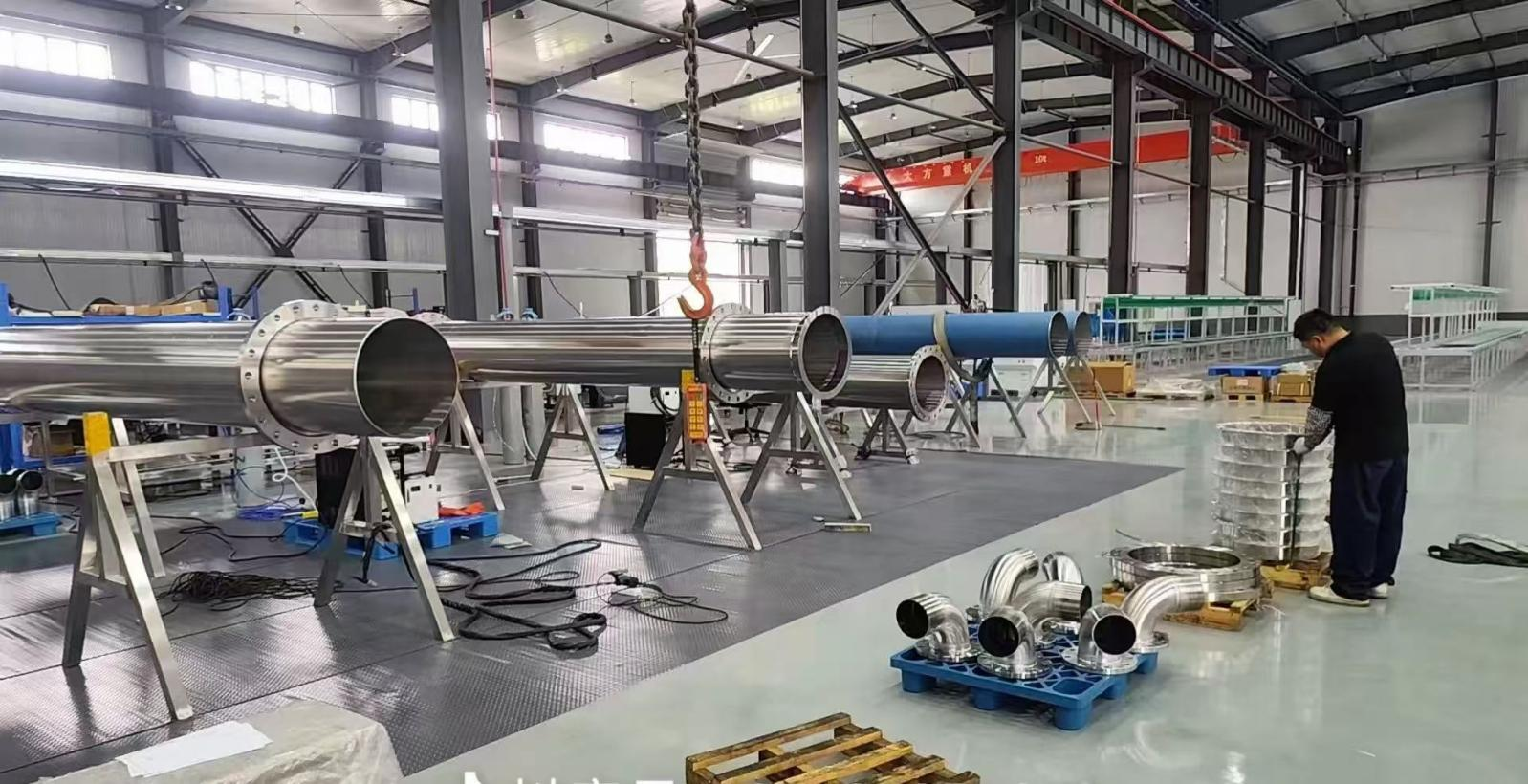
Historically, metal piping has been the standard choice for data center cooling systems. Its widespread use is largely based on familiarity and established practices. However, in the context of modern direct-to-chip liquid cooling environments, this approach presents several challenges .
Corrosion and particle release are among the most significant. Metal piping systems are inherently susceptible to corrosion over time, particularly when exposed to water-based coolants and additives. This process leads to the release of particles into the fluid, which can accumulate and create deposits. In direct-to-chip cooling systems, where cold plates rely on microchannels to transfer heat efficiently, even minimal contamination can lead to fouling, reduced performance, and increased maintenance requirements .
Hydraulic degradation compounds the problem. Corrosion and scaling increase internal surface roughness, resulting in higher friction losses and reduced hydraulic efficiency. Over time, this can significantly impact system performance and energy consumption .
Installation challenges further compound these issues. Metal piping is heavy and typically requires welding and assembly on-site, extending project timelines and introducing variability. As data center construction faces increasing pressure to deliver faster and more efficiently, these constraints are becoming increasingly critical .
The Material Science Foundation: Why Polymers Work
The emerging shift toward polymer piping systems is grounded in material science fundamentals. High-performance engineered polymers offer a combination of properties that address the limitations of metals in cooling applications.
Corrosion-free operation is the most fundamental advantage. Unlike metal, polymers are inherently inert in contact with water-based coolants and glycol mixtures. They do not release particles into the fluid over time, ensuring consistent coolant purity essential for protecting sensitive components such as cold plates .
Smooth internal surfaces are another key differentiator. Polymer piping systems maintain stable and predictable hydraulic performance without the risk of corrosion-induced roughness or scaling. Systems can maintain optimal flow conditions over the long term, with lower friction losses and more predictable pressure drop characteristics .
Contamination-minimized jointing technologies reduce risks during installation. Unlike orbital welding of stainless steel, which requires qualified procedures and creates heat-affected zones, polymer systems can be joined through processes such as infrared welding that create homogeneous molecular bonds without filler materials or welding gases .
The OCP Inspired Milestone: PVDF Manifold Validation
A significant milestone in polymer adoption occurred when GF received OCP Inspired™ recognition for its PVDF-based in-rack manifold for direct-to-chip liquid cooling—the first polymer-based manifold to receive this recognition within the Open Compute Project Inspired program .
The solution is based on GF’s SYGEF PVDF material platform and was developed to support demanding thermal management environments where coolant purity, corrosion resistance, and long-term reliability are critical .
Key design features of the PVDF manifold include:
GF, building on decades of experience in mission-critical applications and ultra-pure water systems for semiconductor manufacturing, is pioneering the use of engineered polymers in next-generation data center cooling . As Charles Freda, Global Head Data Centers at GF, noted: “Receiving OCP Inspired recognition for our PVDF in-rack manifold reflects both the maturity of advanced polymer flow solutions and our commitment to supporting open and interoperable liquid cooling ecosystems for high-performance computing” .
OCP Ecosystem Support: From Recognition to Standardization
The OCP ecosystem increasingly supports interoperable and multi-vendor liquid cooling infrastructures through standardized interfaces and validated material approaches. Industry guidance for liquid cooling systems today recognizes several advanced polymers as suitable wetted materials, supporting the broader adoption of high-performance polymer technologies .
The significance of OCP recognition cannot be overstated. The OCP Inspired program validates that a product meets the community’s needs for open, interoperable solutions. By granting this recognition to a polymer-based manifold, OCP signals that engineered polymers are considered mature, reliable components suitable for mission-critical data center cooling applications .
Engineering and Construction Advantages
Beyond material properties, polymer piping offers significant advantages in project execution:
Prefabrication capability is a major differentiator. Polymer piping systems are significantly lighter than metal alternatives, simplifying handling and transport. Their compatibility with prefabrication enables large sections of piping to be assembled off-site and delivered ready for installation, reducing on-site labor, shortening project timelines, and improving overall quality .
Reduced flushing requirements represent another project benefit. Metal systems require extended flushing to remove particulates, oils, and welding residues. Polymer systems, with their clean jointing technologies and corrosion-free operation, typically require significantly less flushing during commissioning, helping accelerate project timelines.
Lower embodied carbon supports sustainability targets. Polymer piping systems typically have a lower embodied carbon footprint compared to traditional metal solutions, supporting environmental targets as data centers scale . Lower thermal conductivity also helps retain heat within the cooling loop, creating potential for heat recovery and reuse.
Application Boundaries and Material Selection
Polymer piping is not positioned to completely replace metal piping. The boundaries of applicability should be determined by operating conditions and design requirements.
| System Tier | Recommended Material | Core Considerations |
|---|---|---|
| Facility water system (FWS) | Stainless steel 304L/316L or HDPE | Water quality, pressure rating, long-term durability |
| Technology cooling system (TCS) primary | Stainless steel 316L or polymer (PVDF) | Coolant purity, corrosion resistance |
| TCS secondary to rack | PVDF polymer or stainless steel 316L | Cleanliness, flow uniformity |
| In-rack manifold | PVDF polymer | Corrosion-free, flow distribution, lightweight |
Practical Deployment Experience
Full-scope polymer cooling infrastructure projects have demonstrated the viability of engineered polymer solutions at scale. In deployments supporting AI and high-density computing environments, the integrated solution from chiller to rack has supported:
These projects demonstrate how engineered polymer flow solutions are not only viable but essential for scalable, high-density data center cooling.
Conclusion: The Future of Hydronic Design
The shift toward engineered polymer piping systems represents a fundamental change in how the industry approaches hydronic infrastructure. As one industry observer noted, “piping is no longer a secondary component—it is a critical foundation for performance, efficiency, and long-term operation in modern data center cooling” .
The OCP Inspired recognition of PVDF manifolds signals an important industry endorsement of polymer solutions. Combined with the growing recognition of several advanced polymers as suitable wetted materials in industry guidance, this points toward broader adoption of engineered polymer technologies .
As AI compute density continues to rise, liquid cooling system requirements for piping materials will only intensify—wider operating temperature ranges, longer service lives, higher cleanliness grades, and more demanding flow characteristics. In this context, the technical evolution of polymer piping, from material science to manufacturing to real-world validation, merits sustained attention.
The future of hydronic design lies not in choosing between metal and polymer, but in applying the right material to the right application. For the high-purity, corrosion-critical, flow-sensitive environments of direct-to-chip liquid cooling, engineered polymers are increasingly the material of choice. For the high-pressure, high-temperature, chemically aggressive extremes, metal systems remain essential. The hybrid approach—combining the strengths of each material category—is the path forward.
Post time: Aug-20-2026