
Premium SA213 T11 Seamless Alloy Tube for Superheaters, Reheaters, Boilers, Heat Exchangers, and High-Temperature Industrial Piping
Womic Steel produces high-quality SA213 T11 Seamless Alloy Steel Tube, manufacturing chromium-molybdenum (1.25Cr-0.5Mo) ferritic alloy tubes in accordance with ASTM A213 / ASME SA213 specifications. Our SA213 T11 tubes meet the demanding requirements of the American Society of Mechanical Engineers (ASME) Boiler and Pressure Vessel Code, with a minimum tensile strength of 415 MPa and excellent creep resistance at elevated temperatures up to 540°C (1000°F). These seamless alloy tubes are the ideal choice for superheaters, reheaters, high-pressure boilers, heat exchangers, economizers, and high-temperature industrial piping systems requiring good creep strength and oxidation resistance.
Manufacturer: Womic Steel
1. Product Definition and Scope
SA213 T11 (UNS K11597) is a seamless ferritic alloy steel tube specified under ASTM A213 / ASME SA213 for use in boilers, superheaters, heat exchangers, and other high-temperature pressure-containing equipment. The “T11″ designation indicates a nominal composition of 1.25% chromium and 0.5% molybdenum, which provides good high-temperature strength, creep resistance, and oxidation resistance. T11 is one of the most widely used low-alloy steel grades in power generation and petrochemical applications where operating temperatures reach up to 540°C.
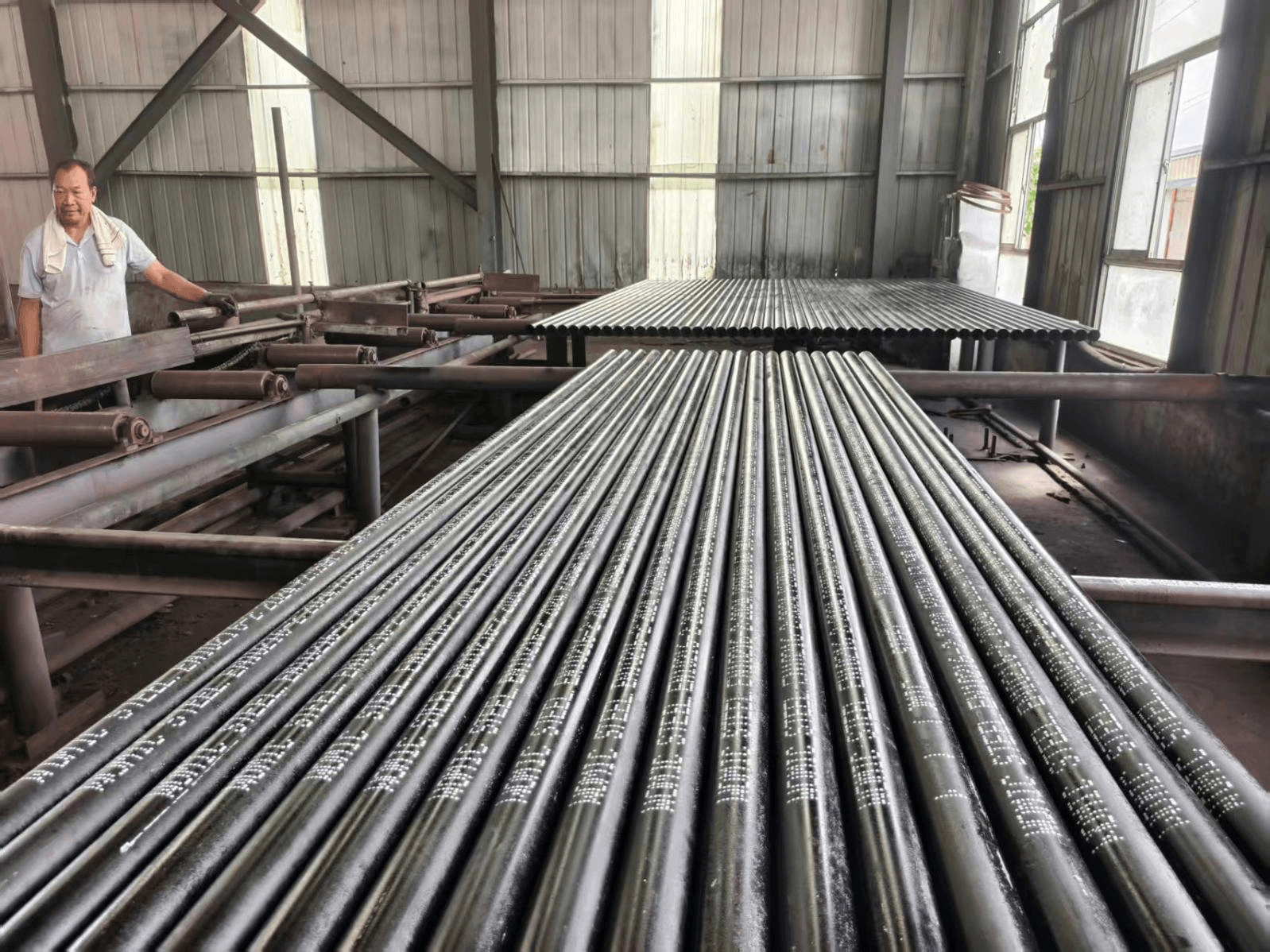
Manufacturing Process: T11 tubes shall be manufactured by the seamless process and shall be either hot-finished or cold-finished, as specified. Hot-finished tubes are produced by hot rolling or extrusion; cold-finished tubes are cold drawn from hot-finished hollows, offering higher dimensional accuracy and smoother surface finish. T11 is typically supplied in the annealed, normalized and tempered, or stress relieved condition.
Grade Designation:
| Designation | Meaning |
| SA213 | ASME specification for seamless ferritic and austenitic alloy-steel tubes for boilers, superheaters, and heat exchangers |
| T11 | Grade designation: 1.25% Chromium – 0.5% Molybdenum ferritic alloy |
| UNS K11597 | Unified numbering system designation for T11 |
Equivalent Standards and Grades:
| Standard | Equivalent Grade |
| ASTM A213 / ASME SA213 | T11 |
| ASTM A335 | P11 (pipe form) |
| EN 10216-2 | X12CrMo5 (1.7362) – comparable |
| DIN 17175 | 13CrMo44 |
| JIS G3462 | STBA 23 |
| BS 3059 | 620-440 |
| ISO 2604 II | S33 |
Manufacturer: Womic Steel
2. Chemical Composition Requirements
The chemical composition of SA213 T11 is precisely controlled to achieve the desired high-temperature strength, creep resistance, and oxidation resistance. The 1.25% chromium content provides moderate oxidation resistance, while the 0.5% molybdenum content enhances creep strength and high-temperature stability.
SA213 T11 Chemical Composition (Heat Analysis – Seamless Tube):
| Element | Composition (%) – Minimum | Composition (%) – Maximum |
| Carbon (C) | 0.05 | 0.15 |
| Manganese (Mn) | 0.30 | 0.60 |
| Phosphorus (P) | — | 0.025 |
| Sulfur (S) | — | 0.025 |
| Silicon (Si) | 0.50 | 1.00 |
| Chromium (Cr) | 1.00 | 1.50 |
| Molybdenum (Mo) | 0.44 | 0.65 |
| Vanadium (V) | — | 0.12 (optional) |
Composition Notes:
| Element | Engineering Note |
| Chromium (1.00-1.50%) | Provides moderate oxidation and corrosion resistance |
| Molybdenum (0.44-0.65%) | Enhances creep strength and high-temperature stability |
| Silicon (0.50-1.00%) | Deoxidation; improves oxidation resistance |
| Carbon (0.05-0.15%) | Balanced for strength and weldability |
| Vanadium (optional) | Additional creep strength enhancement (0.06-0.12%) |
T11 is considered an economic CrMo grade. Its 1.25% Cr content gives better oxidation resistance than carbon steel but remains readily weldable without complex procedure. The 0.5% Mo boosts elevated temperature strength, making T11 suitable for superheater and reheater sections in subcritical plants.
3. Mechanical Properties
The mechanical properties of SA213 T11 seamless tubes are specified to ensure reliable performance under high-temperature and high-pressure operating conditions.
Tensile Requirements (Room Temperature):
| Property | Minimum | Typical | Unit |
| Tensile Strength | 415 MPa (60 ksi) | 450-550 MPa | — |
| Yield Strength (0.2% offset) | 205 MPa (30 ksi) | 280-350 MPa | — |
| Elongation in 2 in. or 50 mm | 30% | 35-40% | — |
Elongation Adjustment for Thin Walls:
| Wall Thickness | Minimum Elongation |
| 5/16 in. (8.0 mm) and over | 30% |
| 1/4 in. (6.4 mm) | 27% |
| 3/16 in. (4.8 mm) | 24% |
| 1/8 in. (3.2 mm) | 21% |
| 1/16 in. (1.6 mm) | 18% |
| 0.035 – 0.022 in. (0.9 – 0.6 mm) | 17% |
| 0.022 – 0.015 in. (0.6 – 0.4 mm) | 16% |
When the wall thickness is between the values above, the minimum elongation shall be determined by the formula: E = 48t + 15.00 (in.) or E = 1.87t + 15.00 (mm).
Hardness Requirements:
| Property | Maximum |
| Brinell Hardness (HBW) | 163 |
| Rockwell Hardness (HRB) | 85 |
High-Temperature Tensile Properties (Reference Values):
| Temperature (°C) | Tensile Strength (MPa) | Yield Strength (MPa) |
| 20 | 450-550 | 280-350 |
| 300 | 420-500 | 230-290 |
| 400 | 400-480 | 210-270 |
| 500 | 350-430 | 180-240 |
| 540 | 300-380 | 150-210 |
Creep Rupture Strength (Typical Values):
| Temperature (°C) | 100,000 Hour Stress (MPa) |
| 450 | 90-110 |
| 500 | 60-75 |
| 540 | 35-45 |
| 570 | 20-30 |
T11 is the workhorse CrMo grade for subcritical plants (540℃, 1000℉). Its creep-rupture strength is substantially higher than carbon steel, and its oxidation limit aligns with typical drum boiler superheater/reheater needs. Good creep ductility also allows coiling for superheater pendant elements without cracking risk.
4. Heat Treatment Requirements
T11 steel tubes shall be reheated for heat treatment according to the following methods, and the heat treatment shall be carried out separately and in addition to heating for hot forming.
Heat Treatment Requirements:
| Grade | Heat Treat Type | Subcritical Annealing or Tempering Temperature (min) |
| T11 (K11597) | Full or isothermal anneal; normalize and temper | 1200°F (650°C) min |
Heat Treatment Process Details:
| Condition | Process | Temperature Range | Application |
| Normalizing | Heating followed by air cooling | 900-960°C (1650-1760°F) | Refine grain structure |
| Tempering | Reheating after normalizing | 650-730°C (1200-1350°F) | Develop final mechanical properties |
| Full Annealing | Slow cooling from austenitizing temperature | 870-900°C (1600-1650°F) | Softest condition for forming |
| Stress Relieving | Heating and slow cooling | 600-650°C (1112-1202°F) | Residual stress reduction after welding |
Normalizing (heated to 900–960°C) followed by tempering (650–730°C) refines the microstructure, balancing tensile strength (≥415 MPa) and ductility (elongation ≥30%).
Manufacturer: Womic Steel performs heat treatment in accordance with ASTM A213 / ASME SA213 requirements. Heat treatment certificates are provided upon request.
5. Dimensional Tolerances
Outside Diameter Tolerances – Hot Finished:
| OD Range (mm) | Tolerance (mm) |
| OD ≤ 101.6 | +0.4 / -0.8 |
| 101.6 < OD ≤ 190.5 | +0.4 / -1.2 |
| 190.5 < OD ≤ 228.6 | +0.4 / -1.6 |
Outside Diameter Tolerances – Cold Drawn:
| OD Range (mm) | Tolerance (mm) |
| OD < 25.4 | ±0.10 |
| 25.4 ≤ OD ≤ 38.1 | ±0.15 |
| 38.1 < OD < 50.8 | ±0.20 |
| 50.8 ≤ OD < 63.5 | ±0.25 |
| 63.5 ≤ OD < 76.2 | ±0.30 |
| 76.2 ≤ OD ≤ 101.6 | ±0.38 |
| 101.6 < OD ≤ 190.5 | +0.38 / -0.64 |
| 190.5 < OD ≤ 228.6 | +0.38 / -1.14 |
Wall Thickness Tolerances – Hot Finished:
| OD Range | WT Range | Tolerance (%) |
| OD ≤ 101.6 | WT ≤ 2.4 | +40 / -0 |
| OD ≤ 101.6 | 2.4 < WT ≤ 3.8 | +35 / -0 |
| OD ≤ 101.6 | 3.8 < WT ≤ 4.6 | +33 / -0 |
| OD ≤ 101.6 | WT > 4.6 | +28 / -0 |
Wall Thickness Tolerances – Cold Drawn:
| OD Range | Tolerance |
| All sizes | ±10% of nominal thickness |
Ovality Tolerances:
| Condition | Permitted Ovality |
| At tube ends | 1.0% of nominal OD |
| At other locations | 1.5% of nominal OD |
Length Tolerances:
| Length Type | Tolerance |
| Random Length (RL) | 5 – 12 meters |
| Specific Length (≤ 6m) | +50 mm / -0 |
| Specific Length (6-12m) | +100 mm / -0 |
6. Available Sizes and Specifications
T11 Seamless Tube Size Range:
| Parameter | Hot Finished | Cold Finished |
| OD Range (mm) | 12.7 – 219.1 | 6.35 – 101.60 |
| OD Range (inches) | 1/2″ – 8″ | 1/4″ – 4″ |
| WT Range (mm) | 0.9 – 15.0 | 0.5 – 12.7 |
| WT Range (inches) | 0.035 – 0.591 | 0.020 – 0.500 |
| Standard Length (m) | 6 – 12 | 6 – 12 |
Common T11 Tube Sizes (OD x WT):
| OD (mm) | WT 2.0 | WT 2.5 | WT 3.0 | WT 3.5 | WT 4.0 | WT 5.0 | WT 6.0 |
| 12.7 | ✓ | ✓ | ✓ | — | — | — | — |
| 15.88 | ✓ | ✓ | ✓ | ✓ | — | — | — |
| 19.05 | ✓ | ✓ | ✓ | ✓ | ✓ | — | — |
| 25.4 | — | ✓ | ✓ | ✓ | ✓ | ✓ | — |
| 31.8 | — | — | ✓ | ✓ | ✓ | ✓ | ✓ |
| 38.1 | — | — | ✓ | ✓ | ✓ | ✓ | ✓ |
| 44.5 | — | — | — | ✓ | ✓ | ✓ | ✓ |
| 50.8 | — | — | — | — | ✓ | ✓ | ✓ |
| 60.3 | — | — | — | — | — | ✓ | ✓ |
| 63.5 | — | — | — | — | — | ✓ | ✓ |
| 76.2 | — | — | — | — | — | — | ✓ |
| 88.9 | — | — | — | — | — | — | ✓ |
| 101.6 | — | — | — | — | — | — | ✓ |
| 114.3 | — | — | — | — | — | — | ✓ |
| 127.0 | — | — | — | — | — | — | ✓ |
| 141.3 | — | — | — | — | — | — | ✓ |
| 159.0 | — | — | — | — | — | — | ✓ |
| 168.3 | — | — | — | — | — | — | ✓ |
| 177.8 | — | — | — | — | — | — | ✓ |
| 219.1 | — | — | — | — | — | — | ✓ |
U-Bend Tubes: Womic Steel can supply SA213 T11 tubes in U-bend configuration. Post-bending, U-bend tubes often require stress-relief heat treatment (650-700°C) to mitigate residual stresses induced during forming, ensuring compliance with the standard’s mechanical property requirements.
Manufacturer: Womic Steel maintains extensive inventory of SA213 T11 seamless tubes in common sizes for immediate dispatch.
7. Inspection and Testing Requirements
| Test / Inspection | Requirement | Method | Acceptance Criteria | Frequency |
| Chemical Analysis | Required | Spectrometer | Per ASTM A213 | Per heat |
| Tensile Test | Required | ASTM A370 | ≥415 MPa / ≥205 MPa | Per heat |
| Hardness Test | Required | ASTM E10/E18 | ≤163 HBW / ≤85 HRB | Per heat |
| Flattening Test | Required | ASTM A213 | No cracks | Per lot |
| Flaring Test | Required | ASTM A213 | No cracks | Per lot |
| Hydrostatic Test or NDT | Required (100%) | ASTM A213 | No leakage or no flaws | Each tube |
Non-Destructive Testing (NDT) Options:
| Test Method | Application | Coverage | Standard |
| Eddy Current Test (ECT) | Surface and near-surface flaw detection | 100% of tube surface | ASTM E309 |
| Ultrasonic Test (UT) | Internal flaw detection | 100% of tube length | ASTM E213 |
| Hydrostatic Test | Pressure integrity verification | 100% of tubes | ASTM A1016 |
Hydrostatic Test Pressure:
● Test Pressure Formula: P = 2St/D
● Allowable Stress (S): Based on material strength at test temperature
● Hold Time: 5 seconds minimum
● Test Record: Required for each tube per ASTM A1016
Flattening Test Requirement: One flattening test shall be made on specimens from each end of one finished tube, not the one used for the flaring test, from each lot.
Flaring Test Requirement: One flaring test shall be made on specimens from each end of one finished tube, not the one used for the flattening test, from each lot.
8. Heat Treatment Verification
Heat treatment is critical for T11 material to achieve the proper microstructure and mechanical properties.
Required Heat Treatment Verification Records (Available upon request):
| Record Type | Information Provided |
| Heat Treatment Certificate | Time-temperature charts, furnace records, quench media |
| Normalizing Record | Temperature, hold time, cooling method |
| Tempering Record | Temperature, hold time, cooling method |
| Microstructure Examination | Verification of proper carbide distribution |
| Hardness Verification | Confirmation of ≤163 HBW after heat treatment |
9. Applications
SA213 T11 seamless tubes are specifically designed for high-temperature, high-pressure service applications where long-term creep strength and oxidation resistance are required.
| Industry | Application |
| Power Generation | Superheater tubes, reheater tubes, boiler water wall tubes, economizer tubes, header tubes for subcritical power plants |
| Combined Cycle Power Plants | Heat Recovery Steam Generator (HRSG) superheater and reheater sections |
| Petrochemical | Hydrogenation reactor piping, high-temperature cracking furnace tubes, reformer tube manifolds |
| Marine Power | High-pressure boilers for vessels, steam systems for ocean-going vessels (DNV certification available) |
| Refining | Catalytic reformer piping, high-temperature heat exchanger tubes, furnace tubes |
| Industrial Heating | Radiant tube heaters, convection section coils, process heaters |
T11 remains the most commonly specified alloy steel for subcritical boiler superheater and reheater applications due to its balance of cost, weldability, and creep strength at 540°C. Good creep ductility allows coiling for superheater pendant elements without cracking risk.
10. Comparison with Other Alloy Grades
| Grade | Nominal Composition | Tensile (MPa) | Yield (MPa) | Max Service Temp | Typical Application |
| Carbon Steel | — | ≥415 | ≥205 | 400°C | Low-temp service |
| T11 | 1.25Cr-0.5Mo | ≥415 | ≥205 | 540°C | Superheater/reheater |
| T22 | 2.25Cr-1Mo | ≥415 | ≥205 | 565°C | Hotter banks |
| T9 | 9Cr-1Mo | ≥415 | ≥205 | 593°C | High-temp service |
| T91 | 9Cr-1Mo-V-Nb | ≥585 | ≥415 | 650°C | Very hot superheater |
T11 is the workhorse CrMo grade for subcritical plants. Its creep-rupture strength is substantially higher than carbon steel, and its oxidation limit aligns with typical drum boiler superheater/reheater needs.
11. Pipe/Tube Connection Methods
| Connection Type | Description | Typical Use |
| Buttweld (BW) | Beveled ends for butt welding | High-temperature boiler tube connections |
| Socket Weld (SW) | Socket for fillet weld | Small diameter connections |
| Flanged | RF or RTJ facing | Easy disassembly for maintenance |
| U-Bend | Bent tubes for heat exchangers | Accommodate thermal expansion |
12. Corrosion Protection (External Coating – Optional)
| Coating | Thickness | Standard | Application |
| Black Varnish | 15-25 microns | Shop primer | Temporary protection during storage and transport |
| Rust Preventive Oil | Light film | — | Short-term protection |
13. Welding Procedure for SA213 T11
SA213 T11 has moderate hardenability and requires proper preheating and post-weld heat treatment to avoid cracking and achieve the required mechanical properties.
Recommended Welding Processes:
| Process | Application |
| GTAW (TIG) | Preferred method; low hydrogen content; suitable for root pass |
| SMAW (Stick) | Field welding; use low-hydrogen electrodes |
| GMAW (MIG) | High deposition rates for fill passes |
Recommended Filler Metals:
| Filler Metal | AWS Classification | Application |
| ER80S-B2 | AWS A5.28 | GTAW root pass |
| E8018-B2 | AWS A5.5 | SMAW fill and cap passes |
| ER90S-B3 | AWS A5.28 | Alternative for higher strength |
Critical Welding Requirements:
| Parameter | Requirement |
| Preheating Temperature | 150-200°C (300-400°F) – required for most thicknesses |
| Maximum Interpass Temperature | 250°C (482°F) |
| Post-Weld Heat Treatment (PWHT) | 650-730°C (1200-1350°F) – required |
| PWHT Hold Time | Minimum 1 hour per 25mm thickness |
| Welding Consumables | Low hydrogen type (H8 or lower) |
| Shielding Gas | 100% Argon for GTAW |
Preheat is mandatory (typically 150-200°C). PWHT is also mandatory, typically tempering around 650-730°C (1200-1350°F) after welding. Hydrogen control is important; low-hydrogen practices must be followed to prevent hydrogen-induced cracking. PWHT tempers the martensitic structure and relieves residual stresses.
14. Traceability and Marking
Each tube shall be marked with the following information (per ASTM A1016):
| Marking Element | Example |
| Manufacturer Name | Womic Steel |
| Specification | ASTM A213 / ASME SA213 |
| Grade | T11 |
| UNS Number | K11597 |
| Size | OD x WT |
| Heat Number | H12345 |
| Length | 6.0m |
| Hydrostatic Test | Hydro / ECT |
Marking Example:
| Line | Content |
| Line 1 | Womic Steel ASTM A213/ASME SA213 T11 |
| Line 2 | 38.1mm x 3.0mm x 6.0m |
| Line 3 | Heat No: H12345 |
| Line 4 | UNS K11597 / ECT |
15. Packaging
| Size | Method |
| Small diameter (≤ 1/2″) | Bundled with steel straps, carton boxes |
| Medium diameter (1/2″ – 2″) | Hexagonal bundles, plastic end caps |
| Large diameter (≥ 2″) | Single or bundled with fabric wrapping, plastic end caps |
16. Quality Documents
| Document | Standard | Included |
| Mill Test Report (MTR) | EN 10204 Type 3.1 | Yes |
| Heat Treatment Certificate | ASTM A213 | Yes |
| Hydrostatic Test Report | ASTM A1016 | Yes |
| NDT Report (UT/ECT) | ASTM E213/E309 | Upon request |
| Dimensional Inspection Report | ASTM A213 | Yes |
| Certificate of Origin | Chamber of Commerce | Yes |
| Third-Party Inspection | SGS, BV, DNV, TUV, LR, ABS | Optional |
17. Contact Information
Website: www.womicsteel.com
E-mail: sales@womicsteel.com
Tel / WhatsApp / WeChat:
Victor: +86 15575100681
Jack: +86 18390957568
Womic Steel – Your reliable partner for SA213 T11 seamless alloy tubes, stainless steel products, and custom solutions for boiler, superheater, heat exchanger, and power generation applications.
Post time: Oct-05-2026