
Introduction: The Challenge of Missing Standards
In August 2026, the Guangdong Stainless Steel Materials and Products Association officially released the group standard Technical Specification for Stainless Steel Piping Used in Liquid Cooling – Data Centers . The release of this standard fills a critical gap in the data center liquid cooling stainless steel piping domain, achieving the industry’s long-awaited goal of “having standards to follow and basis for selection” .
The significance of this moment cannot be overstated. In parallel developments, NVIDIA officially published its Vera Rubin platform 100% full-liquid-cooled 45°C warm-water cooling solution in June 2026, defining it as “one of the most important energy efficiency breakthroughs in data center history” . The Rubin system eliminates all air-cooling components, meaning every cloud service provider and data center operator building for Rubin must transition to liquid cooling technology .
This convergence—standard release coinciding with industry-wide forced migration to liquid cooling—positions the standard as a foundational enabler for the next generation of data center infrastructure.
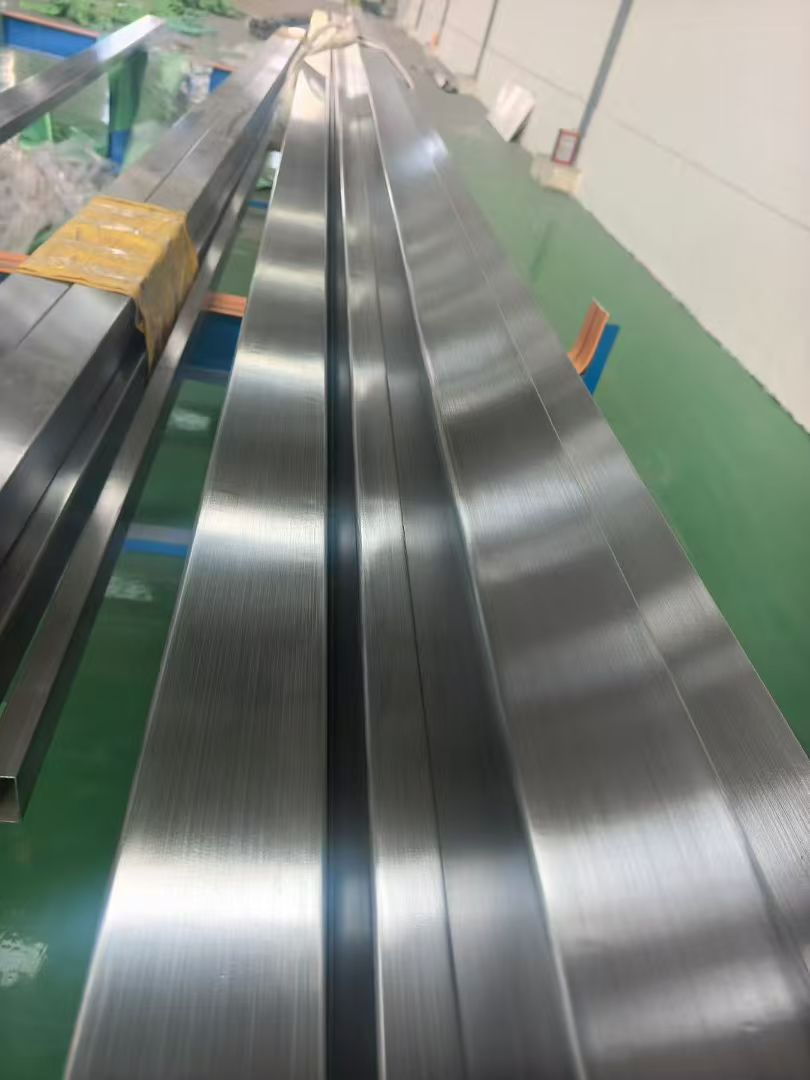
The Problem: An Industry Without a Compass
Although liquid cooling technology has entered a critical window for large-scale deployment, piping systems have long lacked unified technical specifications. The absence of standards for key materials—stainless steel piping—in selection, design, production, and acceptance has frequently left engineering projects “without standards to follow or basis for selection,” constraining efficient coordination across the industry chain and overall system reliability .
The severity of this issue lies in the fact that liquid cooling systems are far more complex than traditional air cooling, spanning multiple professional domains including materials science, fluid mechanics, and thermodynamics. Without standard guidance, design institutes, contractors, and equipment suppliers cannot share a unified technical language, increasing communication costs and error probability.
The Standard: A Full-Process Regulatory System
The Technical Specification for Stainless Steel Piping Used in Liquid Cooling – Data Centers establishes full-process requirements for data center liquid cooling stainless steel piping, covering six core areas :
Scope and Technical Parameters
For aqueous coolants (water, glycol solutions), 06Cr19Ni10 (304) is recommended as the baseline. For chloride-containing environments or fluorinated fluid/mineral oil media, 022Cr17Ni12Mo2 (316L) or higher grades are required .
The standard also specifies cleanliness level requirements according to ISO 4406 for solid particle contamination in the fluid . Seal materials (O-rings, gaskets) must be compatible with the working medium; after immersion testing in the specified coolant, volume change should be between -5% and +10%, with hardness change not exceeding ±5 Shore A .
Industry Collaboration: A “Production-User-Design-Inspection” Ecosystem
The standard was jointly developed by upstream and downstream entities spanning the entire value chain :
This “production-user-design-inspection” collaborative model represents a departure from traditional standards development, where standards are often drafted by a single stakeholder group. The multi-party approach ensures the standard reflects practical requirements from all perspectives—manufacturers who produce the pipe, operators who use it, designers who specify it, and inspectors who validate it.
The standard’s development timeline illustrates the industry’s urgency: initiated in August 2025, it moved through drafting, multiple working group meetings, and expert review before the August 2026 release .
Expert Validation: “Domestically Leading Level”
On July 22, 2026, the standard successfully passed expert review . The review panel reached several key conclusions:
The experts further noted that the standard “provides a unified and reliable technical basis for the design, manufacturing, construction, and acceptance of stainless steel piping systems for liquid cooling, providing strong technical support for the healthy development of strategic emerging industries such as data centers, and leading the industry toward standardized, regulated, high-quality development” .
Standard Value: From Having Standards to Follow to Industry Upgrade
The significance of this standard extends beyond filling a gap.
The Broader Industry Context
These investments represent billions of yuan directed toward liquid cooling infrastructure. The standard provides the technical framework that enables these investments to be realized efficiently and reliably.
The Publication and Launch
According to the Guangdong Stainless Steel Materials and Products Association’s work plan, the standard was officially released in August 2026 . A release ceremony and technical exchange conference was scheduled for August 21, 2026, in Foshan, featuring standard interpretation, expert reports, and a release ceremony .
The conference program reflected the standard’s multi-stakeholder character:
Conclusion: Standards as Industry Catalysts
The Technical Specification for Stainless Steel Piping Used in Liquid Cooling – Data Centers represents more than a document. It is an industry catalyst—a piece of infrastructure that enables the liquid cooling ecosystem to function at scale.
When NVIDIA mandates full liquid cooling and forces the entire data center industry to transition, the absence of standards would create chaos. The presence of this standard provides the technical foundation that allows designers to specify confidently, manufacturers to produce consistently, and operators to verify reliably.
As expert review concluded, the standard “reaches a domestically leading level” and “provides strong technical support for the healthy development of strategic emerging industries such as data centers” . For an industry entering a forced migration to liquid cooling, that support is not optional—it is essential.
The standard also provides a model for future standards development in adjacent fields. The “production-user-design-inspection” collaborative approach, the integration of material science with system engineering, and the alignment with international reference standards all offer lessons for other emerging technology domains where standards are needed to enable scale.
Post time: Aug-24-2026